The 5-4-3-2-1 Grounding Technique for Anxiety, Stress, and Overwhelm
When stress hits or your mind starts racing, it can be hard to calm the mental chatter. If this sounds familiar, you’re not alone. Many of my clients describe feeling overwhelmed, overstimulated, or caught in loops of anxious thoughts that feel impossible to switch off.
In therapy, one of the simplest grounding tools I often introduce is the 5‑4‑3‑2‑1 grounding technique. This sensory‑based exercise helps bring attention back to the present moment by engaging your senses.
The 5-4-3-2-1 tool works by shifting your attention to what you can see, hear, touch, smell and taste, helping you step away from spiralling thoughts and reconnect with what’s happening around you.
What is the 5-4-3-2-1 Grounding Tool?
The 5-4-3-2-1 tool uses your five senses to bring your attention away from spiralling thoughts and towards what’s happening around you.
It’s a simple way of interrupting the cycle of overthinking and reconnecting with the present when anxiety, stress or overwhelm starts to feel like too much.
What Does it Mean to Be Grounded?
Being grounded means bringing your attention back to the present rather than getting caught up in worries about the future or thoughts about the past.
Grounding isn’t about making difficult thoughts or feelings disappear. It’s about creating a little distance from them so you can become more aware of what’s happening around you.
What are the Benefits of the 5-4-3-2-1 Tool?
Stress and anxiety can sometimes leave you caught in racing thoughts, feeling physically tense or struggling to concentrate. When your mind and body feel overloaded, it can be difficult to step back from what’s happening and focus on the present.
The 5-4-3-2-1 tool gives you something practical to focus on by engaging your senses. It may help you:
- Interrupt spiralling or racing thoughts
- Reduce the intensity of stress and anxiety
- Bring your attention back to the present
- Feel more grounded and steady
- Create a little distance from overwhelming thoughts and feelings
- Manage moments of stress, anxiety and overwhelm
When Can You Use the 5-4-3-2-1 Grounding Tool?
The 5-4-3-2-1 tool can be useful when you notice stress, anxiety or overwhelm building, before they start to feel like too much.
You don’t have to wait until you’re feeling completely overwhelmed. Using the tool when you first notice signs of stress or anxiety may help you refocus before things escalate.
When Might the Tool Be Helpful?
- Feeling stressed or overwhelmed
- Experiencing anxiety or racing thoughts
- Beginning to panic
- Feeling disconnected from the present moment
- Struggling to concentrate because your mind feels busy or overwhelmed
How Do You Use the 5-4-3-2-1 Grounding Tool?
In my work with clients, I often recommend practising the 5-4-3-2-1 technique when you are feeling relatively calm. Becoming familiar with the process can make it feel more natural and easier to use when you notice stress or anxiety building.
I also encourage clients to use the tool early, when they first notice signs of anxiety or overwhelm, rather than waiting until these feelings become intense. This can give you an opportunity to pause, refocus your attention and steady yourself before things feel more difficult to manage.
Before you begin, you might find it helpful to take a few slow, comfortable breaths and notice how you are feeling.
You can then move through the five steps below at your own pace, focusing on each of your senses in turn.
Here’s a quick overview of the tool before we go through each step in detail.
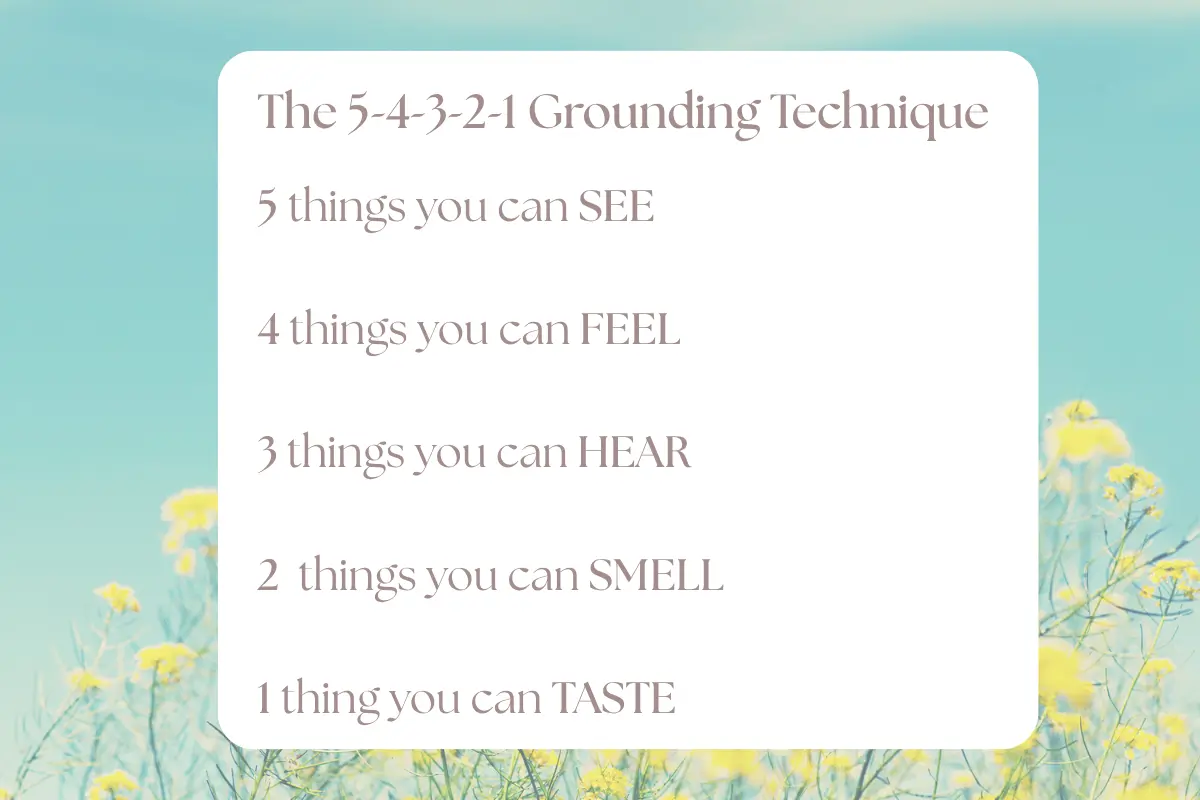
Step 1: Identify 5 Things You Can See
Begin by bringing your attention to your surroundings and naming five things you can see. For example:
- A plant in the room
- A picture on the wall
- A chair or piece of furniture
Take your time and notice small details such as colour, shape or texture.
This helps bring your attention into the present through what you can see.
Step 2: Identify 4 Things You Can Feel
Next, notice four things you can feel through touch. For example:
- Your feet on the floor
- The chair beneath you
- Your hands resting on your lap
- The fabric of your clothing
This helps bring your attention to physical sensations and back to the present.
Step 3: Identify 3 Things You Can Hear
Now, gently shift your focus to three things you can hear. For example:
- Birds singing
- Traffic in the distance
- A dog barking
- The sound of your fingers tapping lightly
This gives you another way to focus your attention on what’s happening around you.
If it feels comfortable, you might close your eyes for a moment to help you focus on the sounds around you.
Step 4: Identify 2 Things You Can Smell
Take a slow breath in and notice two different smells around you. For example:
- The aroma of food or coffee
- A scented candle
- Fresh air
- A nearby flower
If you cannot immediately notice two distinct smells, simply notice if there is any scent present in your environment, however subtle. You could also shift your position to see if you notice anything different.
Step 5: Identify 1 Thing You Can Taste
Finally, bring your attention to one thing you can taste. For example:
- The lingering taste of food
- Chewing gum
- A sip of water
- Any taste currently in your mouth
This final step completes the exercise by bringing your attention to your sense of taste.
Can the 5-4-3-2-1 Tool Be Adapted?
This tool is flexible and can be adapted to suit different needs and abilities. If you find it doesn’t feel helpful or accessible, you can adjust it in a way that works for you.
Even a simplified version can be useful in the moment. For example:
- If you have difficulty with sight, you can focus more on sound or touch
- If hearing is limited, you can rely more on visual or physical sensations
- If smell or taste is difficult to access, you can focus on the senses that are most available to you
- If you feel very overwhelmed, you may find it helpful to complete just one or two of the steps
The goal is not to complete the exercise perfectly, but to use whatever feels most supportive in the moment.
Why Do Therapists Use Grounding Techniques in Therapy?
One reason I often introduce grounding tools in therapy is that they are simple, practical and can be used outside the therapy room. The 5-4-3-2-1 tool doesn’t require any special equipment, and once you’re familiar with it, you can use it at home, at work or while travelling.
When someone feels caught up in anxious or overwhelming thoughts, a grounding tool can provide something practical to focus on. By bringing attention to the senses and what’s happening in the present, it can create a pause from spiralling thoughts and help you feel more steady.
Grounding is one of many tools that can be explored in counselling, and what is helpful will vary from person to person.
How to Get the Most Out of Grounding Tools
The 5-4-3-2-1 tool can become easier to use when you’ve practised it during calmer moments. Becoming familiar with the steps means you don’t have to work out what to do when you’re already feeling stressed or overwhelmed.
You can also use it early, when you first notice stress or anxiety building, rather than waiting until things feel intense.
Do Grounding Techniques Work for Everyone?
No single grounding tool works for everyone, and the 5-4-3-2-1 won’t necessarily feel helpful in every situation. Some people find it useful, while others may prefer breathing exercises, movement, journalling, or a combination of different strategies.
It’s also worth remembering that grounding isn’t necessarily about making distress disappear immediately. The aim is to help you pause, reconnect with the present and create some space around difficult thoughts or feelings
If you find the 5-4-3-2-1 isn’t helpful, particularly when you’re experiencing very high levels of distress, it may be worth trying a different approach or seeking additional support.
A Practical Guide for Busy, Overloaded Minds
If stress, overthinking or overwhelm often leave your mind feeling overloaded, I’ve created a free practical guide to help you use the 5-4-3-2-1 grounding tool.
Calm & Recentre: The 5-4-3-2-1 Tool for Busy, Overloaded Minds includes a printable Quick Reference, practical tips and guidance on adapting the tool to suit you.